All About Validated CAS-004 Actual Exam
Realistic of CAS-004 vce materials and answers for CompTIA certification for IT examinee, Real Success Guaranteed with Updated CAS-004 pdf dumps vce Materials. 100% PASS CompTIA Advanced Security Practitioner (CASP+) Exam exam Today!
Online CompTIA CAS-004 free dumps demo Below:
NEW QUESTION 1
A security analyst has been tasked with providing key information in the risk register. Which of the following outputs or results would be used to BEST provide the information needed to determine the security posture for a risk decision? (Select TWO).
- A. Password cracker
- B. SCAP scanner
- C. Network traffic analyzer
- D. Vulnerability scanner
- E. Port scanner
- F. Protocol analyzer
Answer: BD
Explanation:
The tools that can be used to provide key information in the risk register are SCAP scanner and vulnerability scanner. SCAP stands for Security Content Automation Protocol, which is a set of standards and specifications for automating the management of security configuration, vulnerability assessment, and compliance evaluation. SCAP scanner is a tool that can scan systems and networks for security issues based on SCAP content. Vulnerability scanner is a tool that can scan systems and networks for known vulnerabilities and weaknesses. These tools can help the security analyst identify and prioritize the risks associated with the systems and networks, as well as provide possible remediation actions. Verified References: https://www.techtarget.com/searchsecurity/definition/Security-Content-Automation-Protocol https://learn.microsoft.com/en-us/azure/security/fundamentals/vulnerability-management
 https://www.techtarget.com/searchsecurity/definition/vulnerability-scanner
NEW QUESTION 2
A company is outsourcing to an MSSP that performs managed detection and response services. The MSSP requires a server to be placed inside the network as a log aggregate and allows remote access to MSSP analyst. Critical devices send logs to the log aggregator, where data is stored for 12 months locally before being archived to a
multitenant cloud. The data is then sent from the log aggregate to a public IP address in the MSSP datacenter for analysis.
A security engineer is concerned about the security of the solution and notes the following.
* The critical devise send cleartext logs to the aggregator.
* The log aggregator utilize full disk encryption.
* The log aggregator sends to the analysis server via port 80.
* MSSP analysis utilize an SSL VPN with MFA to access the log aggregator remotely.
* The data is compressed and encrypted prior to being achieved in the cloud. Which of the following should be the engineer’s GREATEST concern?
- A. Hardware vulnerabilities introduced by the log aggregate server
- B. Network bridging from a remote access VPN
- C. Encryption of data in transit
- D. Multinancy and data remnants in the cloud
Answer: C
Explanation:
Encryption of data in transit should be the engineer’s greatest concern regarding the security of the solution. Data in transit refers to data that is being transferred over a network or between devices. If data in transit is not encrypted, it can be intercepted, modified, or stolen by attackers who can exploit vulnerabilities in the network protocols or devices. The solution in the question sends logs from the critical devices to the aggregator in cleartext and from the aggregator to the analysis server via port 80, which are both insecure methods that expose the data to potential attacks. Verified References: https://www.comptia.org/training/books/casp-cas-004-study-guide , https://us-cert.cisa.gov/ncas/tips/ST04-019
NEW QUESTION 3
A host on a company’s network has been infected by a worm that appears to be spreading via SMB. A security analyst has been tasked with containing the incident while also maintaining evidence for a subsequent investigation and malware analysis.
Which of the following steps would be best to perform FIRST?
- A. Turn off the infected host immediately.
- B. Run a full anti-malware scan on the infected host.
- C. Modify the smb.conf file of the host to prevent outgoing SMB connections.
- D. Isolate the infected host from the network by removing all network connections.
Answer: D
NEW QUESTION 4
A security is assisting the marketing department with ensuring the security of the organization’s social media platforms. The two main concerns are:
The Chief marketing officer (CMO) email is being used department wide as the username The password has been shared within the department
Which of the following controls would be BEST for the analyst to recommend?
- A. Configure MFA for all users to decrease their reliance on other authentication.
- B. Have periodic, scheduled reviews to determine which OAuth configuration are set for each media platform.
- C. Create multiple social media accounts for all marketing user to separate their actions.
- D. Ensue the password being shared is sufficiently and not written down anywhere.
Answer: A
Explanation:
Configuring MFA for all users to decrease their reliance on other authentication is the best option to improve email security at the company. MFA stands for multi-factor authentication, which is a method of verifying a user’s identity by requiring two or more factors, such as something the user knows (e.g., password), something the user
has (e.g., token), or something the user is (e.g., biometric). MFA can prevent unauthorized access to email accounts even if the username or password is compromised or shared. Verified References: https://www.comptia.org/training/books/casp-cas-004-study-guide , https://www.csoonline.com/article/3239144/what-is-mfa-how-multi-factor-authentication- works.html
NEW QUESTION 5
An analyst received a list of IOCs from a government agency. The attack has the following characteristics:
* 1. The attack starts with bulk phishing.
* 2. If a user clicks on the link, a dropper is downloaded to the computer.
* 3. Each of the malware samples has unique hashes tied to the user.
The analyst needs to identify whether existing endpoint controls are effective. Which of the following risk mitigation techniques should the analyst use?
- A. Update the incident response plan.
- B. Blocklist the executable.
- C. Deploy a honeypot onto the laptops.
- D. Detonate in a sandbox.
Answer: D
Explanation:
Detonating the malware in a sandbox is the best way to analyze its behavior and determine whether the existing endpoint controls are effective. A sandbox is an isolated environment that mimics a real system but prevents any malicious actions from affecting the actual system. By detonating the malware in a sandbox, the analyst can observe how it interacts with the system, what files it creates or modifies, what network connections it establishes, and what indicators of compromise it exhibits. This can help the analyst identify the malware’s capabilities, objectives, and weaknesses. A sandbox can also help the analyst compare different malware samples and determine if they are related or part of the same campaign.
* A. Updating the incident response plan is not a risk mitigation technique, but rather a proactive measure to prepare for potential incidents. It does not help the analyst identify whether existing endpoint controls are effective against the malware.
* B. Blocklisting the executable is a risk mitigation technique that can prevent the malware from running on the system, but it does not help the analyst analyze its behavior or determine whether existing endpoint controls are effective. Moreover, blocklisting may not be feasible if each malware sample has a unique hash tied to the user.
* C. Deploying a honeypot onto the laptops is a risk mitigation technique that can lure attackers away from the real systems and collect information about their activities, but it does not help the analyst analyze the malware’s behavior or determine whether existing endpoint controls are effective. A honeypot is also more suitable for detecting network- based attacks rather than endpoint-based attacks.
NEW QUESTION 6
An organization’s assessment of a third-party, non-critical vendor reveals that the vendor does not have cybersecurity insurance and IT staff turnover is high. The organization uses the vendor to move customer office equipment from one service location to another. The vendor acquires customer data and access to the business via an API. Given this information, which of the following is a noted risk?
- A. Feature delay due to extended software development cycles
- B. Financial liability from a vendor data breach
- C. Technical impact to the API configuration
- D. The possibility of the vendor’s business ceasing operations
Answer: A
Explanation:
Reference: https://legal.thomsonreuters.com/en/insights/articles/data-breach-liability
NEW QUESTION 7
A bank is working with a security architect to find the BEST solution to detect database management system compromises. The solution should meet the following requirements:
Work at the application layer
Send alerts on attacks from both privileged and malicious users Have a very low false positive
Which of the following should the architect recommend?
- A. FIM
- B. WAF
- C. NIPS
- D. DAM
- E. UTM
Answer: D
NEW QUESTION 8
Clients are reporting slowness when attempting to access a series of load-balanced APIs that do not require authentication. The servers that host the APIs are showing heavy CPU utilization. No alerts are found on the WAFs sitting in front of the APIs.
Which of the following should a security engineer recommend to BEST remedy the
performance issues in a timely manner?
- A. Implement rate limiting on the API.
- B. Implement geoblocking on the WAF.
- C. Implement OAuth 2.0 on the API.
- D. Implement input validation on the API.
Answer: A
Explanation:
Rate limiting is a technique that can limit the number or frequency of requests that a client can make to an API (application programming interface) within a given time frame. This can help remedy the performance issues caused by high CPU utilization on the servers that host the APIs, as it can prevent excessive or abusive requests that could overload the servers. Implementing geoblocking on the WAF (web application firewall) may not help remedy the performance issues, as it could block legitimate requests based on geographic location, not on request rate. Implementing OAuth 2.0 on the API may not help remedy the performance issues, as OAuth 2.0 is a protocol for authorizing access to APIs, not for limiting requests. Implementing input validation on the API may not help remedy the performance issues, as input validation is a technique for preventing invalid or malicious input from reaching the API, not for limiting requests. Verified References: https://www.comptia.org/blog/what-is-rate-limiting https://partners.comptia.org/docs/default-source/resources/casp-content-guide
NEW QUESTION 9
A security analyst discovered that the company's WAF was not properly configured. The main web server was breached, and the following payload was found in one of the
malicious requests:
Which of the following would BEST mitigate this vulnerability?
- A. Network intrusion prevention
- B. Data encoding
- C. Input validation
- D. CAPTCHA
Answer: C
NEW QUESTION 10
An organization's finance system was recently attacked. A forensic analyst is reviewing the contents of the compromised files for credit card data. Which of the following commands should
the analyst run to BEST determine whether financial data was lost?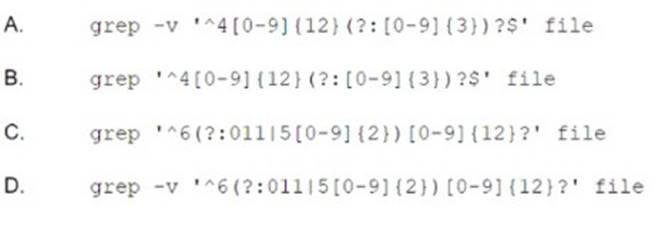
- A. Option A
- B. Option B
- C. Option C
- D. Option D
Answer: C
NEW QUESTION 11
A software company wants to build a platform by integrating with another company's established product. Which of the following provisions would be MOST important to include when drafting an agreement between the two companies?
- A. Data sovereignty
- B. Shared responsibility
- C. Source code escrow
- D. Safe harbor considerations
Answer: B
Explanation:
When drafting an agreement between two companies, it is important to clearly define the responsibilities of each party. This is particularly relevant when a software company is looking to integrate with an established product. A shared responsibility agreement ensures that both parties understand their respective responsibilities and are able to work together efficiently and effectively. For example, the software company might be responsible for integrating the product and ensuring it meets user needs, while the established product provider might be responsible for providing ongoing support and maintenance. By outlining these responsibilities in the agreement, both parties can ensure that the platform is built and maintained successfully. References: CompTIA Advanced Security Practitioner (CASP+) Study Guide, Chapter 8, Working with Third Parties.
NEW QUESTION 12
An organization wants to perform a scan of all its systems against best practice security configurations.
Which of the following SCAP standards, when combined, will enable the organization to view each of the configuration checks in a machine-readable checklist format for fill automation? (Choose two.)
- A. ARF
- B. XCCDF
- C. CPE
- D. CVE
- E. CVSS
- F. OVAL
Answer: BF
Explanation:
Reference: https://www.govinfo.gov/content/pkg/GOVPUB-C13- 9ecd8eae582935c93d7f410e955dabb6/pdf/GOVPUB-C13- 9ecd8eae582935c93d7f410e955dabb6.pdf (p.12)
XCCDF (Extensible Configuration Checklist Description Format) and OVAL (Open Vulnerability and Assessment Language) are two SCAP (Security Content Automation Protocol) standards that can enable the organization to view each of the configuration
checks in a machine-readable checklist format for full automation. XCCDF is a standard for expressing security checklists and benchmarks, while OVAL is a standard for expressing system configuration information and vulnerabilities. ARF (Asset Reporting Format) is a standard for expressing the transport format of information about assets, not configuration checks. CPE (Common Platform Enumeration) is a standard for identifying and naming hardware, software, and operating systems, not configuration checks. CVE (Common Vulnerabilities and Exposures) is a standard for identifying and naming publicly known cybersecurity vulnerabilities, not configuration checks. CVSS (Common Vulnerability Scoring System) is a standard for assessing the severity of cybersecurity vulnerabilities, not configuration checks. Verified References: https://www.comptia.org/blog/what-is-scap https://partners.comptia.org/docs/default-source/resources/casp-content-guide
NEW QUESTION 13
A developer implement the following code snippet.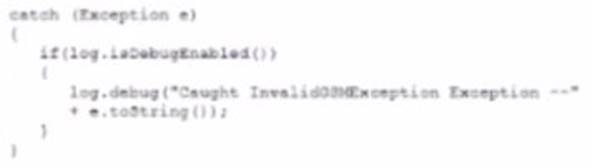
Which of the following vulnerabilities does the code snippet resolve?
- A. SQL inject
- B. Buffer overflow
- C. Missing session limit
- D. Information leakage
Answer: A
Explanation:
SQL injection is a type of vulnerability that allows an attacker to execute malicious SQL commands on a database by inserting them into an input field. The code snippet resolves this vulnerability by using parameterized queries, which prevent the input from being interpreted as part of the SQL command. Verified References:
https://www.comptia.org/training/books/casp-cas-004-study-guide , https://owasp.org/www- community/attacks/SQL_Injection
NEW QUESTION 14
A Chief Information Security Officer (CISO) is concerned that a company's current data disposal procedures could result in data remanence. The company uses only SSDs. Which of the following would be the MOST secure way to dispose of the SSDs given the CISO's concern?
- A. Degaussing
- B. Overwiting
- C. Shredding
- D. Formatting
- E. Incinerating
Answer: C
Explanation:
Shredding is the most secure way to dispose of the SSDs given the CISO’s concern. Shredding involves physically destroying the SSDs by cutting them into small pieces that make the data unrecoverable. Shredding is the ultimate data destruction method for both HDDs and SSDs, as it ensures that no data remanence is left on the media.
NEW QUESTION 15
A security operations center analyst is investigating anomalous activity between a database server and an unknown external IP address and gathered the following data:
• dbadmin last logged in at 7:30 a.m. and logged out at 8:05 a.m.
• A persistent TCP/6667 connection to the external address was established at 7:55 a.m. The connection is still active.
• Other than bytes transferred to keep the connection alive, only a few kilobytes of data transfer every hour since the start of the connection.
• A sample outbound request payload from PCAP showed the ASCII content: "JOIN
#community".
Which of the following is the MOST likely root cause?
- A. A SQL injection was used to exfiltrate data from the database server.
- B. The system has been hijacked for cryptocurrency mining.
- C. A botnet Trojan is installed on the database server.
- D. The dbadmin user is consulting the community for help via Internet Relay Chat.
Answer: D
Explanation:
The dbadmin user is consulting the community for help via Internet Relay Chat. The clues in the given information point to the dbadmin user having established an Internet Relay Chat (IRC) connection to an external address at 7:55 a.m. This connection is still active, and only a few kilobytes of data have been transferred since the start of the connection. The sample outbound request payload of "JOIN #community" also suggests that the user is trying to join an IRC chatroom. This suggests that the dbadmin user is using the IRC connection to consult the community for help with a problem. Therefore, the root cause of the anomalous activity is likely the dbadmin user consulting the community for help via IRC. References: CompTIA Advanced Security Practitioner (CASP+) Study Guide, Chapter 10, Investigating Intrusions and Suspicious Activity.
NEW QUESTION 16
An attacker infiltrated an electricity-generation site and disabled the safety instrumented system. Ransomware was also deployed on the engineering workstation. The environment has back-to-back firewalls separating the corporate and OT systems. Which of the following is the MOST likely security consequence of this attack?
- A. A turbine would overheat and cause physical harm.
- B. The engineers would need to go to the historian.
- C. The SCADA equipment could not be maintained.
- D. Data would be exfiltrated through the data diodes.
Answer: A
NEW QUESTION 17
A threat analyst notices the following URL while going through the HTTP logs.
Which of the following attack types is the threat analyst seeing?
- A. SQL injection
- B. CSRF
- C. Session hijacking
- D. XSS
Answer: D
Explanation:
XSS stands for cross-site scripting, which is a type of attack that injects malicious code into a web page that is then executed by the browser of a victim. The URL in the question contains a script tag that tries to execute a JavaScript code from an external
source, which is a sign of XSS. Verified References: https://www.comptia.org/training/books/casp-cas-004-study-guide , https://owasp.org/www- community/attacks/xss/
NEW QUESTION 18
Leveraging cryptographic solutions to protect data that is in use ensures the data is encrypted:
- A. when it is passed across a local network.
- B. in memory during processing
- C. when it is written to a system’s solid-state drive.
- D. by an enterprise hardware security module.
Answer: B
NEW QUESTION 19
A security analyst is reviewing network connectivity on a Linux workstation and examining the active TCP connections using the command line.
Which of the following commands would be the BEST to run to view only active Internet connections?
- A. sudo netstat -antu | grep “LISTEN” | awk ‘{print$5}’
- B. sudo netstat -nlt -p | grep “ESTABLISHED”
- C. sudo netstat -plntu | grep -v “Foreign Address”
- D. sudo netstat -pnut -w | column -t -s $’\w’
- E. sudo netstat -pnut | grep -P ^tcp
Answer: E
Explanation:
Reference: https://www.codegrepper.com/code-examples/shell/netstat+find+port
The netstat command is a tool that displays network connections, routing tables, interface statistics, masquerade connections, and multicast memberships. The command has various options that can modify its output. The options used in the correct answer are:
p: Show the PID and name of the program to which each socket belongs.
n: Show numerical addresses instead of trying to determine symbolic host, port or user names.
u: Show only UDP connections. t: Show only TCP connections.
The grep command is a tool that searches for a pattern in a file or input. The option used in the correct answer is:
P: Interpret the pattern as a Perl-compatible regular expression (PCRE).
The pattern used in the correct answer is ^tcp, which means any line that starts with tcp. This will filter out any UDP connections from the output.
The sudo command is a tool that allows a user to run programs with the security privileges of another user (usually the superuser or root). This is necessary to run the netstat command with the -p option, which requires root privileges.
The correct answer will show only active TCP connections with numerical addresses and program names, which can be considered as active Internet connections. The other answers will either show different types of connections (such as listening or local), use different options that are not relevant (such as -a, -l, -w, or -s), or use different commands that are not useful (such as awk or column). References: https://man7.org/linux/man- pages/man8/netstat.8.html https://man7.org/linux/man-pages/man1/grep.1.html https://man7.org/linux/man-pages/man8/sudo.8.html
NEW QUESTION 20
......
100% Valid and Newest Version CAS-004 Questions & Answers shared by Certleader, Get Full Dumps HERE: https://www.certleader.com/CAS-004-dumps.html (New 553 Q&As)